Shifts in Mobile Platform Security Protocols for Live Casino Interactions Amid Global Regulatory Updates
Blake Sullivan · Aug 22, 2026
Shifts in Mobile Platform Security Protocols for Live Casino Interactions Amid Global Regulatory Updates
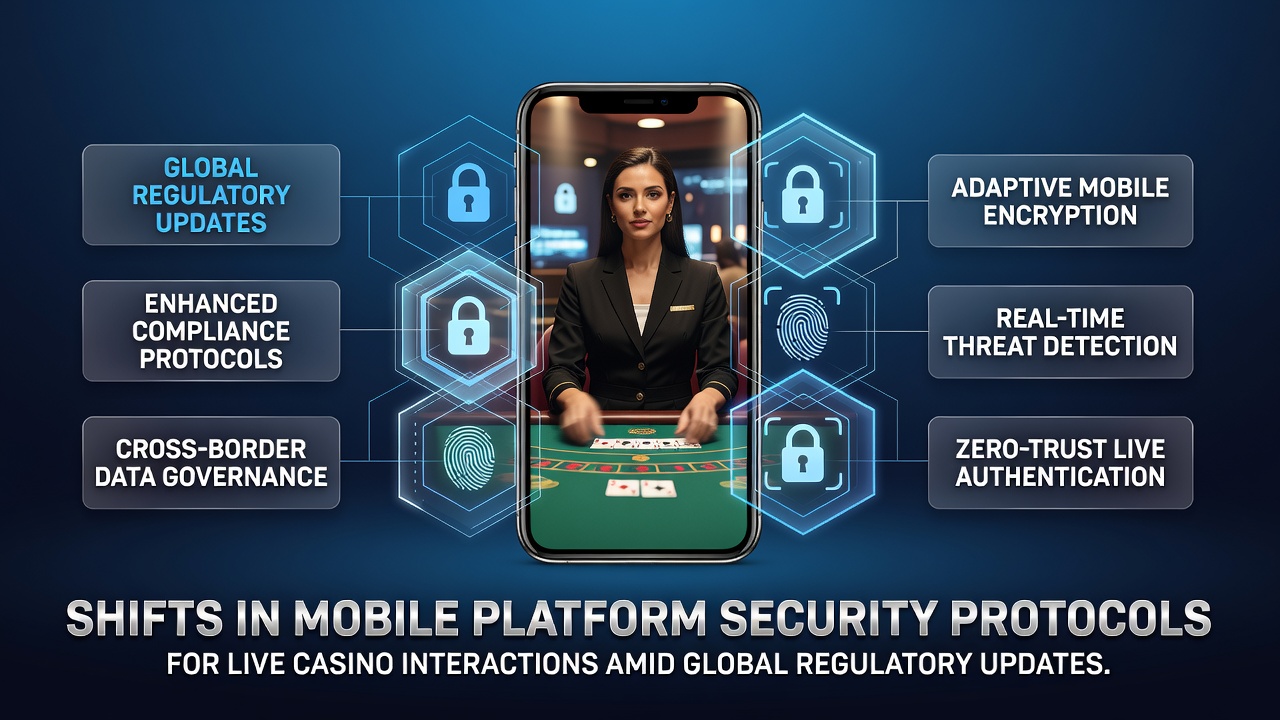
Global regulatory frameworks have undergone substantial revisions by August 2026, prompting mobile platforms that host live casino interactions to adopt new security protocols designed to address data protection, transaction integrity, and real-time verification requirements. Regulators across multiple jurisdictions have introduced measures that emphasize encryption standards, multi-factor authentication, and continuous monitoring systems, while live dealer environments present unique challenges because video streams and player inputs occur simultaneously on the same device.
Regulatory Developments Driving Protocol Changes
Authorities in the European Union, Australia, and Canada have updated digital service rules that directly affect mobile gaming applications. The European Data Protection Board released updated guidelines in early 2026 that require platforms to implement end-to-end encryption for all live session data, and these requirements took effect in August 2026. Australian regulators expanded their expectations around real-time identity verification for interactive gambling services, while Canadian provincial frameworks introduced mandatory breach notification timelines that shortened from 72 hours to 24 hours for any incident involving live player accounts.
These updates coincide with broader cybersecurity directives. The European Union Agency for Cybersecurity published a 2026 technical report that outlines recommended controls for streaming-based services, and many operators have aligned their mobile architectures with those recommendations to maintain compliance across borders.
Technical Adjustments in Mobile Security Layers
Mobile operating systems and application developers responded by integrating hardware-backed keystores with biometric gates for session initiation. Live casino platforms now route video feeds through isolated containers that prevent screen capture or unauthorized recording, while player chat and betting inputs pass through separate encrypted channels. Researchers at several universities documented increased deployment of behavioral analytics engines that flag anomalies such as rapid location changes or unusual input patterns during active dealer sessions.
Tokenization of payment credentials has become standard practice, and many platforms replaced static API keys with short-lived, device-bound tokens that expire after each live round. These measures reduce the attack surface when a device is lost or compromised, and they align with new expectations from multiple oversight bodies.

Effects on Live Dealer Experiences
Live casino interactions require stable, low-latency connections, yet the new security layers add processing overhead that operators must balance against performance. Platforms have introduced adaptive streaming that lowers video resolution during high-security verification steps, then restores quality once the session stabilizes. Players encounter more frequent re-authentication prompts during extended play periods, particularly when the application detects network changes or background activity.
Operators have also adjusted their backend architectures. Many now maintain regional data processing nodes that keep live session records within the same jurisdiction as the player, satisfying data residency rules that several countries strengthened in 2025 and 2026. This geographic segmentation reduces cross-border transfer risks while supporting faster regulatory audits.
Regional Implementation Patterns
North American markets show varied adoption rates. Some U.S. states require third-party penetration testing before any protocol update reaches production, whereas others accept operator self-certification accompanied by quarterly reports. In Asia-Pacific jurisdictions, emphasis has fallen on network-level controls that restrict connections to approved mobile carriers, and these restrictions appear in updated licensing conditions effective August 2026.
Industry groups such as the Responsible Gambling Council have issued guidance documents that help operators map new security controls to player protection outcomes, although implementation remains the responsibility of each licensed entity.
Conclusion
By August 2026 the convergence of updated data protection rules and cybersecurity expectations has produced measurable shifts in how mobile platforms secure live casino interactions. Encryption, tokenization, behavioral monitoring, and regional data handling now form core components of compliant systems, and operators continue to refine these elements to meet both regulatory timelines and technical performance demands across different markets.