Detroit Casinos Generate $112.3 Million in March 2026 Revenue as Sports Betting Climbs 41.9%
Vera Carter · Apr 13, 2026

Detroit Casinos Generate $112.3 Million in March 2026 Revenue as Sports Betting Climbs 41.9%
Monthly Report Highlights Steady Gaming Amid Fluctuations
The Michigan Gaming Control Board (MGCB) dropped its March 2026 revenue figures on April 9, revealing that Detroit's three commercial casinos—MGM Grand Detroit, MotorCity Casino Hotel, and Hollywood Casino at Greektown—racked up a collective $112.3 million in aggregate gaming revenue (AGR), a number that captures the net win from all gaming activities after payouts; table games and slots alone drove $111.5 million of that total, while retail sports betting chipped in $810,424 in qualified adjusted gross receipts (QAGR), marking a solid performance even as broader trends showed some back-and-forth.
Data from the report underscores how these venues, long-standing pillars in Detroit's economy since their launch in the late 1990s under strict state oversight, continue to draw crowds despite seasonal shifts, with March's uptick from February signaling warmer weather or perhaps post-winter pent-up demand pulling players back to the tables and machines.
Observers note that aggregate gaming revenue, calculated as total wagers minus winnings returned to players, offers a clear snapshot of casino profitability, and for March 2026, this $112.3 million figure positions the trio as key revenue generators not just for themselves but for public coffers too.
Table Games and Slots: Year-Down but Month-Up
Core to the operation, table games and slots accounted for the lion's share at $111.5 million, reflecting a 4.5% dip from March 2025's levels—perhaps tied to economic pressures or competing entertainment options—yet an encouraging 11.5% jump from February 2026, when colder months often slow foot traffic; figures like these show how monthly variances play out in real time, with slots typically dominating due to their accessibility and table games appealing to higher-stakes players seeking blackjack, poker, or roulette action.
Take MGM Grand Detroit, for instance, a sprawling complex with thousands of machines and dozens of tables that consistently leads in scale; alongside MotorCity's hotel-integrated setup and Greektown's urban vibe, these spots blend gaming floors with dining and shows, factors that likely buoyed the month-over-month gain as spring approached.
What's interesting here is the resilience: even with that year-over-year decline, the 11.5% MoM rise suggests momentum building, especially now in early April 2026 when warmer days could sustain or amplify such trends.
Sports Betting Delivers Sharp Year-Over-Year Growth
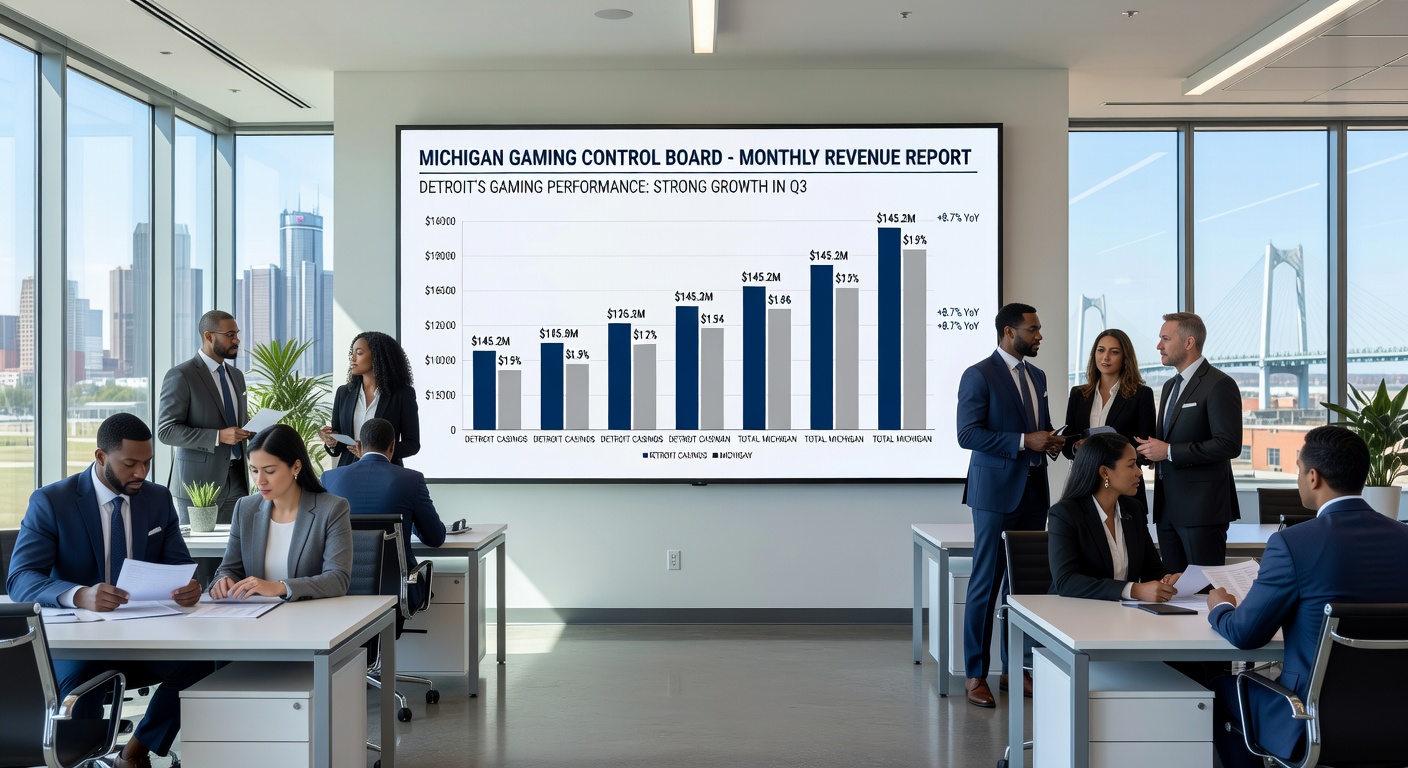
Retail sports betting, handled at dedicated lounges within each casino, posted $810,424 in QAGR—a metric adjusted for promotional play and free bets—representing a robust 41.9% increase from March 2025, driven no doubt by expanded leagues, major events like March Madness wrapping up, or simply more bettors embracing in-person wagering post-legalization expansions; this surge stands out because sports betting, legalized in Michigan in 2019 alongside online options, has grown rapidly, with retail handles complementing digital platforms even as mobile apps handle the bulk.
Experts tracking the sector point out that QAGR focuses on taxable receipts after deductions, making this $810,424 a clean indicator of health, and the 41.9% YoY climb—far outpacing traditional gaming's dip—hints at diversification paying off for operators who invested in sleek betting areas equipped with live odds boards and teller windows.
And as April 2026 unfolds with NBA playoffs heating up and MLB seasons in full swing, such growth could carry forward, keeping retail sports as a bright spot amid any slot or table fluctuations.
Tax Remittances Bolster State and City Budgets
Casinos didn't just pocket the proceeds; they funneled $9.0 million straight to state gaming taxes—levied at rates like 8.1% on slots' AGR and varying percentages on tables—while sending $13.3 million in wagering taxes plus municipal development agreement payments to the City of Detroit, funds that support everything from schools to infrastructure under long-term pacts established when the casinos opened.
These contributions, detailed in the MGCB's monthly bulletin, total over $22 million for the month, underscoring the venues' role as economic engines; Detroit's share, in particular, stems from agreements ensuring the city gets a cut to offset any social costs of gaming while funding revitalization projects downtown.
But here's the thing: such payouts scale directly with revenue, so March's $112.3 million AGR translated to tangible public benefits, a pattern that's held steady since the casinos' inception and one that local officials count on amid budget cycles.
Breaking Down the Trends: YoY Decline Meets MoM Recovery
Digging into comparisons, the 4.5% year-over-year drop in table games and slots AGR—from whatever March 2025 baseline the data reflects—contrasts sharply with sports betting's ascent, painting a picture of an industry adapting to new preferences; meanwhile, that 11.5% month-to-month boost from February's presumably lower figures (due to winter slowdowns) aligns with historical patterns where March often rebounds as calendars flip.
People who've followed Michigan gaming know these swings aren't unusual—holidays, weather, even national events nudge the numbers—yet the aggregate $112.3 million holds firm, especially when stacked against broader U.S. casino reports showing similar ebbs and flows.
Turns out, for Detroit specifically, the three properties' combined might weathers such variability, with each bringing unique draws: MGM's luxury polish, MotorCity's entertainment hub feel, Greektown's neighborhood charm—all feeding into totals that regulators monitor closely for compliance and sustainability.
Casino Profiles and Operational Context
MGM Grand Detroit, the largest by footprint, boasts over 3,500 slots and 100-plus tables, often topping individual revenue charts; MotorCity Casino Hotel integrates gaming with 2,900 machines, extensive poker rooms, and a 400-room hotel that keeps guests on-site longer, boosting dwell time and spends; Hollywood Casino at Greektown, with its Greek-themed flair amid downtown bustle, packs nearly 3,000 slots into a compact space, appealing to walk-ins from nearby districts.
Regulated under the Michigan Gaming Control Board since 1996 legislation, these operators submit detailed audits monthly, ensuring transparency in everything from win calculations to tax withholdings; aggregate figures like March's obscure individual performances, but the collective $112.3 million signals operational steadiness, particularly as April 2026 reports loom with potential for continued sports-driven lifts.
It's noteworthy that while online gaming thrives separately in Michigan—handled by the same board—these brick-and-mortar spots maintain a distinct retail edge, with physical presence fostering loyalty through comps, events, and atmospheres digital can't replicate.
Broader Implications in Early 2026 Landscape
As the MGCB compiles data into April 2026, March's report sets a benchmark, especially with sports betting's 41.9% YoY gain hinting at sustained interest amid playoff seasons; the $9.0 million state haul and $13.3 million to Detroit reinforce fiscal reliability, funds that circulate into public services without fail.
Those studying gaming economics observe how such revenues stabilize amid inflation or recessions—slots and tables provide steady volume, sports adds volatility with upside—creating a balanced portfolio for stakeholders; and with no major disruptions noted in the release, the path forward looks consistent, barring unforeseen shifts.
One case that parallels this: past Marches have seen similar MoM recoveries post-February lulls, a rhythm that players and analysts alike anticipate each year.
Conclusion
March 2026's $112.3 million AGR from Detroit's casino trio encapsulates a month of contrasts—table games and slots easing 4.5% year-over-year even as they climbed 11.5% from February, sports betting surging 41.9% to $810,424 QAGR, and taxes totaling $22.3 million flowing to state and city; data from the MGCB paints a clear, factual picture of endurance and adaptation, with early April 2026 offering prime time to watch if these trajectories hold amid blooming seasons and buzzing sports slates.
The reality is these figures don't just represent wins on felts or reels; they fuel communities, a cycle that's defined Michigan's gaming scene for decades and shows no signs of slowing.